Trip guides / Outdoors
Camping in Portugal: Best Campsites and Wild Camping Rules
Camping is a popular, affordable way to see Portugal, with campsites near beaches, in national parks and close to cities. Here’s what you need to know about camping in Portugal, including the rules on wild camping.
Quick answer: stay at official campsites (parques de campismo), which are plentiful along the coast and in natural parks, and usually have pools, shops and cafés. Wild camping isn’t an option: pitching a tent elsewhere needs a council licence and the landowner’s express permission. Campervans can’t stay overnight in protected areas, Natura 2000 sites or coastal zones except at authorised spots, and elsewhere only for up to 48 hours in one municipality. Fines run from €60 to €300, or €120 to €600 in protected and coastal areas. Book ahead for summer and coastal sites.
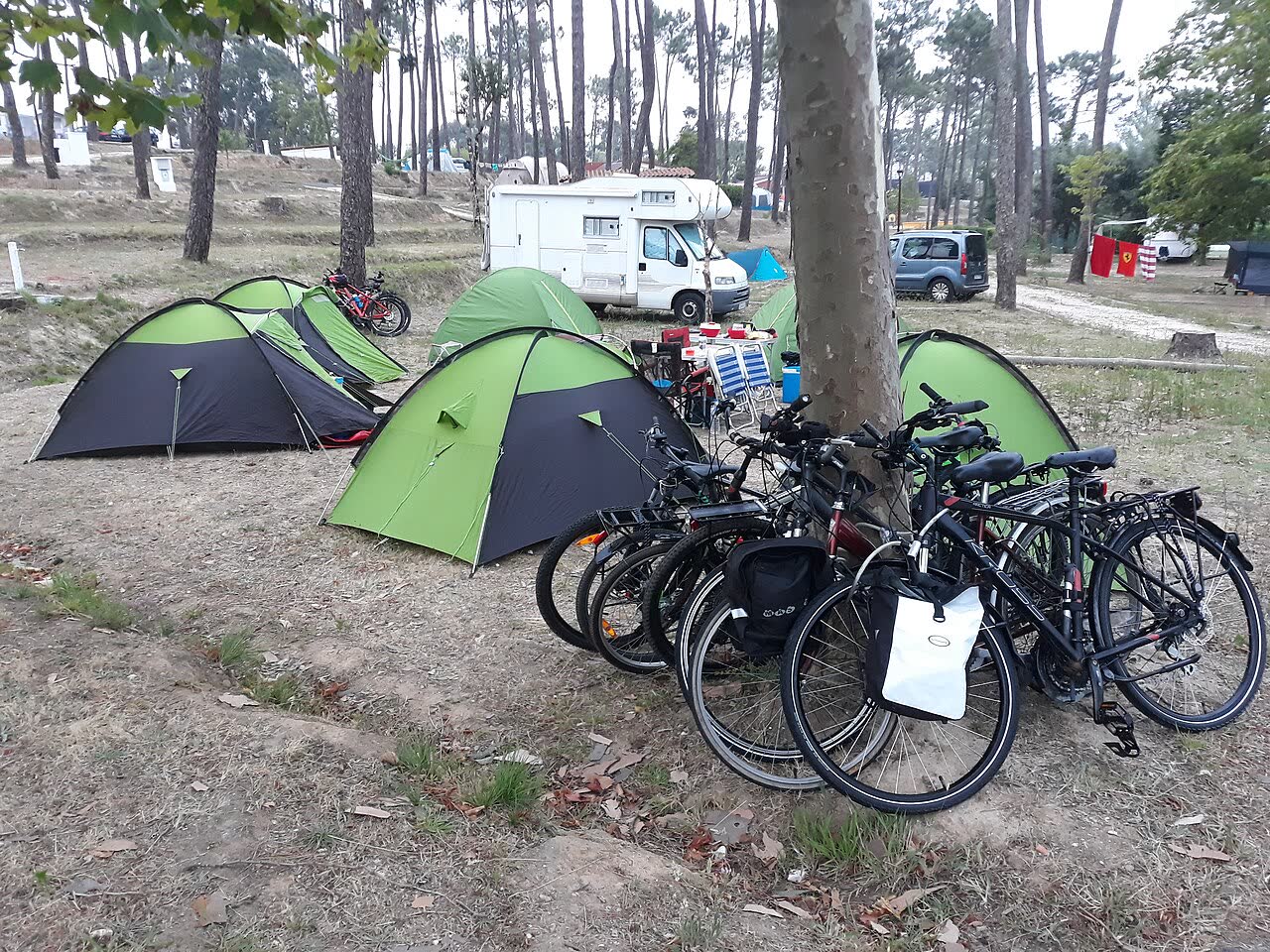
Why camp in Portugal
Portugal has a long camping tradition, and many Portuguese families still spend their summer holidays under canvas. Campsites sit behind some of the country’s best beaches, beside rivers in the mountains and on the edge of Lisbon. They’re one of the cheapest ways to travel, and the mild climate means the season is long, especially in the Algarve.
Where to camp
- The Costa Vicentina: campsites near wild beaches and surf spots. See Costa Vicentina and surf camps in Portugal.
- The Algarve: many campsites, some with bungalows. See where to stay in the Algarve.
- Peneda-Gerês: mountains, rivers and lakes. See Peneda-Gerês.
- Serra da Estrela: cooler mountain air in summer. See Serra da Estrela.
- Near Lisbon: campsites on the Costa da Caparica and near Sintra and Cascais. Lisbon’s own city campsite sits inside Monsanto Park, about 8km from the centre. It’s open all year, rents bungalows and has buses into the centre. See Costa da Caparica.
- The islands: some campsites in the Azores and Madeira.
What campsites are like
- Types: sites range from big, private holiday parks with pools and entertainment to simple municipal campsites with basic facilities. Some chains, such as Orbitur, run several sites around the country.
- Facilities: expect hot showers, toilets, washing-up sinks and electric hook-ups for an extra fee. Larger sites add a pool, a shop, a restaurant and a playground.
- Prices: you usually pay per person, per tent or vehicle, and for electricity. Coastal sites in July and August cost the most. Check the site’s own website for current rates.
- Shade: many sites are under pine or eucalyptus trees. Ask for a shaded pitch in summer.
- Camping cards: some campsite discount cards give lower rates outside the high season.
- Dogs: many campsites accept dogs, often for a small fee, but not all do, so check first. See Portugal with a dog.
Rules and tips
- Wild camping: pitching a tent outside campsites is generally prohibited, especially in natural parks and on the coast. Under the law on occasional camping (Decreto-Lei 310/2002), camping anywhere else needs a licence from the local council, the landowner’s express permission and approval from the health authority and the police, so in practice it isn’t an option for travellers. Campervans follow separate overnight rules; see campervans in Portugal.
- Campervan rules in brief: under the Highway Code (article 50-A, as amended by Lei 66/2021), motorhomes can’t stay overnight or set up camp in protected areas, Natura 2000 sites or zones covered by coastal plans, except at authorised places. Elsewhere, unless the council has its own rules, an approved motorhome can stay overnight for up to 48 hours in the same municipality. “Overnight” means with people inside between 10pm and 7am.
- Fines: the GNR and park wardens have carried out repeated checks in popular coastal areas, such as Aljezur and Vila do Bispo on the Costa Vicentina. Campervan fines run from €60 to €300, or €120 to €600 in protected and coastal areas, and you can pay on the spot at the minimum rate.
- Fire risk: barbecues and fires are banned in high-risk periods. Follow local warnings.
- Booking: essential in July and August.
- Bungalows: many campsites rent cabins if you don’t want a tent.
- ID: campsites usually ask for a passport or ID card when you check in.
When to go
- May, June and September: the best months, with warm days, quieter sites and lower prices.
- July and August: hot and busy. Portuguese families book coastal sites for weeks, so reserve early.
- Autumn and winter: the Algarve stays mild, and some sites stay open all year. Mountain sites can be cold and wet, and some close.
- Fire season: the critical fire period usually runs from 1 July to 30 September and can be extended in hot weather. During it, fires and barbecues are banned in rural areas. Check the fire warnings each day, especially inland.
What to pack
- A warm layer: nights on the Atlantic coast and in the mountains can be cool, even in summer.
- A good tent peg mallet: some coastal pitches are sandy, others hard and stony.
- A European plug adaptor for electric hook-ups.
- Sun protection: the sun is strong from spring to autumn.
Prefer more comfort?
See glamping in Portugal below and campervans in Portugal.
Glamping and nature stays
Great regions for glamping and nature stays are the Alentejo coast and Costa Vicentina, the Silver Coast dunes, the Azores and the mountains of Peneda-Gerês and Serra da Estrela. For a special stay, try Areias do Seixo in the dunes or the Sete Cidades Lake Lodge in the Azores.
Special nature stays
- Areias do Seixo (Silver Coast): an eco-luxury retreat among the dunes. Check prices.
- Sete Cidades Lake Lodge (Azores): near the crater lakes. Check prices.
- Pacheca (Douro): sleep in a giant wine barrel. Check prices.
- L’AND Vineyards (Alentejo): skylight suites for stargazing. Check prices.
See unique places to stay in Portugal and eco travel in Portugal.
The best regions
- The Alentejo coast: eco-camps and cabins near wild beaches. See Milfontes.
- The western Algarve: surf glamping near Aljezur and Sagres. See Aljezur.
- The mountains: cabins in Peneda-Gerês and Serra da Estrela.
- The Azores: nature lodges across the islands. See where to stay in the Azores.
Tips
- Book early: places are small and popular in summer.
- Car: usually essential.
- Nights: cooler than you might expect, so pack layers.
FAQ
Is wild camping legal in Portugal?
Not in practice. Camping outside a licensed campsite needs council permission and the landowner’s consent, and it’s banned in protected areas and on beaches. Use official campsites instead.
Can you sleep in a campervan by the beach?
Only where it’s expressly allowed. Overnight stays are banned in protected areas and coastal zones outside authorised spots, so use campsites or official motorhome areas.
How long can you park a campervan overnight in Portugal?
Outside protected and coastal areas, up to 48 hours in the same municipality, unless the council sets its own rules. At authorised motorhome areas there’s no limit on nights.
What is the fine for wild camping in Portugal?
For campervans, €60 to €300, rising to €120 to €600 in protected areas, Natura 2000 sites and coastal zones. Tents pitched without a licence can also be fined, and the GNR has run checks on the Costa Vicentina.
Are campsites in Portugal open all year?
Some are, especially in the Algarve and around Lisbon, including the Monsanto city campsite. Many mountain and smaller sites close in winter, so check before you go.
Do I need to book a campsite in Portugal?
In July and August, yes, especially on the coast. In May, June and September you can often turn up, but booking a day or two ahead is safer.
More: hiking in Portugal and Portugal on a budget.
Some links in this guide are affiliate or referral links (GetYourGuide, Booking.com, Discover Cars, Welcome Pickups, Airalo, Yesim, Saily, Tiqets, Radical Storage, EKTA, AirHelp, Uber). If you book or sign up through them we may earn a small commission or ride credit at no extra cost to you. It helps keep our groups and this site free.
Still got questions?
Ask 305,000+ travellers and locals in our free Facebook groups.