Madeira Travel Tips: 30 Things to Know Before You Go (2026)
Madeira is small but steep, its airport is known for strong winds, and it can be sunny in Funchal while the peaks are cold and misty. Since January 2026, every official trail also needs a booked slot. These 30 quick tips cover the practical things first-timers often learn the hard way, followed by where to stay and the festivals worth planning around. For country-wide advice, see things to know before visiting Portugal.
Quick answer: give yourself 5 to 7 days with Funchal as your base. Book a 30-minute slot on the SIMplifica portal for every official trail (€4.50, or €10.50 for PR1, which is now one-way only). Hire a car with a decent engine, ideally an automatic, for part of the trip. Check the mountain webcams before driving up, pack layers and a headtorch, and plan nothing tight on the day you land, as wind can divert flights. At the market, ask the price per kilo before you taste any fruit.
Flights, wind and the airport
- Leave slack on the day you land. Direct flights to Funchal (FNC) take about 1h30 to 1h45 from Lisbon or Porto, and many UK and European cities fly direct too. Madeira airport has official wind limits for landing. When gusts are too strong, planes circle, try again or divert, usually to Porto Santo, Lisbon, Faro or the Canary Islands, and some flights are cancelled. Don’t book a tour for your arrival afternoon or a tight onward connection. See Madeira airport to Funchal.
- Know what a wind diversion means. The airline has to get you to Madeira, often on a later flight once the wind drops. Wind counts as bad weather, so EU compensation isn’t usually due, but the airline must still provide meals and, if needed, a hotel. See flight delays and compensation.
- Check the Aerobus hours. The airport is near Santa Cruz on the east coast, about 20 to 30 minutes from Funchal by car. The Aerobus costs €6.70, cash only on board, and takes about 25 minutes to the Funchal seafront, but it only leaves the airport from 8:30am to 10pm. Outside those hours, a taxi usually costs about €25 to €35 to central Funchal. Uber and Bolt both work, but prices rise when several flights land together. See Uber vs Bolt vs taxi. For a fixed price, book a pickup with Welcome Pickups: an English-speaking driver meets you at arrivals with a name sign and tracks your flight if it’s late, and child seats can be added when you book.
Car hire and driving
- Hire a car for part of the trip. Many visitors spend their first days in Funchal without a car, where parking is tight, then hire one for two or three days to explore the west, the north coast and the mountains. Most car-hire firms have desks in arrivals or a short shuttle away. Compare prices on Discover Cars. See getting around Madeira.
- Book an automatic early. The old mountain roads are steep, narrow and full of hairpins, so choose a car with a decent engine. An automatic makes hill starts much easier, but there are fewer of them and they cost more. See car rental in Portugal.
- Use the tunnels, and take the old roads slowly. The fast VR1 road and its tunnels put Calheta and Santana under an hour from Funchal. Mountain roads are slower and often wet or foggy, so allow extra time and avoid driving them for the first time in the dark. See driving in Portugal.
- Fill up before the hills and park early. Petrol stations are few in the mountains. Parking is limited in central Funchal and at popular trailheads, and parking at Pico do Arieiro is paid by the hour.
Buses and taxis
- Ignore old bus numbers. Since July 2024 the island’s buses have run as one network, SIGA, and every route got a new three-digit number on 9 March 2026. Timetables differ on weekdays, Saturdays and Sundays, so check the return bus on the official SIGA website before you leave.
- Use buses for the coast, not the mountains. Services to the north and the far west are slow and run only a few times a day. There’s no useful public transport to the summit of Pico do Arieiro, and no bus goes up to Fanal, so use a car, a tour or a taxi for the high ground.
- Agree taxi prices first. Madeira’s taxis are yellow with a blue stripe, and you can hire one for a set trip, such as dropping you at one end of a walk and collecting you at the other. Portugal’s new national taxi tariff (from 23 October 2026) only applies in Madeira if the regional government adopts it, so check the fare with your driver.
Weather and microclimates
- Plan by side of the island, not just by month. Madeira, the “island of eternal spring”, sits in the Atlantic about 500km off the coast of Africa, so it’s mild all year. Funchal and the south coast are sunny and sheltered, with typical daytime highs of 19 to 20°C in winter and 24 to 27°C in summer. The north coast is greener and wetter, and the peaks, at over 1,800m, can be cold and in cloud while Funchal is in sunshine. The island is only about 57km long, so you can drive from banana plantations by the sea to bare peaks above the clouds in under an hour. See the best time to visit Madeira.
- Check the webcams before you drive up. Before heading to Pico do Arieiro or the high levadas, check the mountain forecast and webcams. If it’s cloudy up top, head to the coast and swap days, and leave a few flexible days for mountain hikes.
- Pack layers, even in summer. Bring a light rain jacket and a warm layer: on PR1 it can be close to freezing at sunrise. Rain picks up from October and through November, especially in the mountains, and winter brings more rain to the north coast too. Visiting in winter? See Madeira in winter and Portugal in winter.
Hiking and levadas
- Book every official trail on SIMplifica. Since January 2026, all 42 official PR trails need a 30-minute start slot, booked and paid on the government’s SIMplifica portal: €4.50 per trail for independent hikers, or €10.50 for PR1. Children aged 12 and under go free but still need a slot. Book before you set off, as there is often no mobile signal at trailheads; rangers check, and walking without a booking can mean a fine. See Madeira levada walks.
- Work out whether a pass pays. Passes cost €9 for one day, €22.50 for three days and €52.50 for seven days, covering every trail except PR1, and each walk still needs a booked slot. Tour companies with an IFCN agreement pay a lower rate (€3, or €7 for PR1) and book for you. See Madeira on a budget.
- PR1 is one-way only. Since it reopened on 1 May 2026, after damage from the 2024 wildfires, the full route runs from Pico do Arieiro to Pico Ruivo: about 7km and 3 to 4 hours, plus about an hour down to Achada do Teixeira. Expect steep steps, narrow ridges and tunnels, and go for sunrise if you can. The drive between the two ends takes about 30 to 40 minutes, so book a taxi, a pickup or a tour in advance, or leave a second car at the end. Only the short stretch to the Pedra Rija viewpoint is open both ways. See Pico do Arieiro to Pico Ruivo.
- Pack a headtorch and shoes with grip. Your phone light isn’t enough for tunnels; on PR9 Caldeirão Verde some are low and wet. Paths are often slippery, and some levadas have steep drops with no railings, so stay on official trails. See the Levada do Caldeirão Verde.
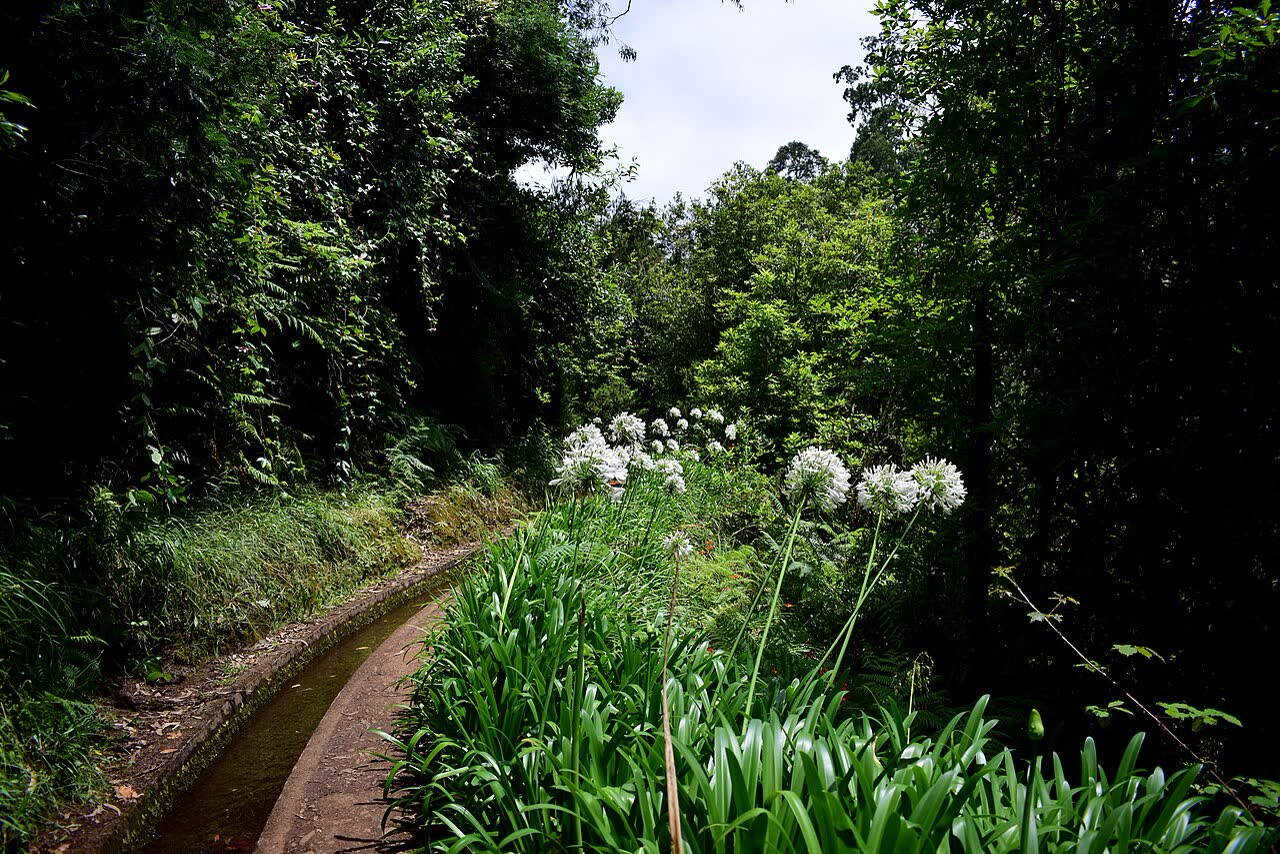
- Start early and check the trail status the day before. Trails close after storms, rockfalls and fires, and car parks at the popular trailheads fill by mid-morning. Levadas, the old irrigation channels, make level paths through forests and along cliffs. For an easy first walk, try PR11, about 3km return on a flat path; see the Vereda dos Balcões. The classic PR6, to 25 Fontes and Risco, starts at Rabaçal on the Paul da Serra plateau and follows a levada through UNESCO-listed laurel forest to a pool fed by dozens of small falls. Allow about 3 hours there and back. For something wilder, Ponta de São Lourenço is a rocky peninsula walk at the island’s eastern tip.
Money, food and drink
- Budget for the tourist tax. Funchal charges €2 per person per night for up to seven nights, from age 13, and most other Madeira councils also charge €2. Funchal’s council voted on 1 October 2026 to double its rate to €4 from January 2027. See Portugal’s tourist tax.
- Carry some cash. You need it for the Aerobus driver, the Monte toboggan, mountain cafés and the minibus down to the start of the 25 Fontes walk (about €3 to €5 each way). See the 25 Fontes levada.
- Order espetada and bolo do caco. Espetada is beef seasoned with garlic and bay leaf, grilled on a skewer over wood (traditionally a bay-leaf stick) and served with warm garlic-buttered bolo do caco. Espada, black scabbardfish, is a deep-sea fish that comes with fried banana; some English menus call it swordfish, but it isn’t. Also try lapas, limpets grilled in their shells with garlic and lemon. See what to eat in Madeira.
- Take poncha slowly, and taste Madeira wine. Poncha is sugar-cane rum, honey and lemon, served without ice: it’s sweet but strong, so one or two is plenty. The harbour bars of Câmara de Lobos, about 15 minutes west of Funchal, are the classic place for one. Madeira wine is a fortified wine aged in warm lodges, and a tasting in Funchal is the easy way to try it. See the Madeira wine guide.
Sights and timing
- Ask the price per kilo at the market. The Mercado dos Lavradores is free and opens Monday to Friday 7am to 7pm and Saturday 7am to 2pm. Some fruit stalls overcharge visitors: before you accept a taste, ask quanto custa o quilo? (how much per kilo?), and get the total before anything is bagged. See the Mercado dos Lavradores.
- Plan the bottom of the Monte toboggan. The cable car from the Old Town to Monte costs about €16 one way or €22 return in 2026. It reopened in April 2026 after a winter closure, so check it’s running before a winter visit. Up in Monte you can also visit Monte Palace Tropical Garden. The wicker toboggan costs €30 for one person, €40 for two or €60 for three, in cash, and can’t be booked ahead. It ends at Livramento, partway down the hill, so take a taxi or bus, or walk. See the Monte toboggan.
- Budget about €5 for Cabo Girão. Since 1 January 2026 there has been a fee of about €5 per person for the viewpoint and glass skywalk, on one of Europe’s highest sea cliffs, with free entry for children up to 12. It’s about 20 minutes’ drive west of Funchal. See Cabo Girão.
- Go to Fanal early for the fog. Mornings from autumn to spring give the best chance of mist among the old laurel trees. There’s no café, so bring water and snacks. Skip the São Vicente caves on the north coast: they have been closed since 2020. See the Fanal forest and the São Vicente caves.
- Book whale watching in any month. Deep water close to shore means trips from Funchal reach the open sea within minutes, and some boats leave from Calheta too. Dolphins are seen on most trips and whales are frequent. Trips usually last two to three hours; see whale-watching trips and the best Madeira tours.
Beaches and swimming
- Don’t expect sandy beaches. Most beaches are smooth pebbles, where the water gets deep quickly and waves break close to the shore. The golden sand at Calheta and Machico is imported, and Seixal has natural black sand, but waves roll in there most days. See the best beaches in Madeira.
- Swim in the lidos and lava pools. Funchal’s lido complexes cost €6 for adults in 2026 and have lifeguards all year. The main pools at Porto Moniz cost about €3, with lifeguards usually from 1 May to 15 October. The rock can be sharp, so wear water shoes. See the Porto Moniz natural pools.
- Go to Porto Santo for real sand. The neighbouring island has about 9km of golden sand. The Lobo Marinho ferry from Funchal takes about two and a half hours (about 3 hours 15 minutes in autumn 2026, after a mechanical fault), and the sea can be rough. Flights take about 25 minutes. See Porto Santo.
Where to stay
- Funchal: the capital and the best base, with the market, the most restaurants and easy tours. The Lido area suits pools and sea views, and the old town (Zona Velha) suits eating out. See places to stay in Funchal.
- Calheta and the southwest: sunnier and quieter, with a sandy beach.
- The north coast (São Vicente, Porto Moniz): green, dramatic and peaceful, and best with a car.
Browse all Madeira stays, or compare the areas in where to stay in Madeira.
Festivals worth planning around
- Flower Festival: in 2026 it ran from 30 April to 31 May, with the big flower parades through Funchal on two Sundays, 3 and 17 May. See the Madeira Flower Festival.
- Atlantic Festival: runs through June, with fireworks over the bay on Saturday nights.
- Wine Festival: from late August into mid-September, around the grape harvest.
- Christmas and New Year: in 2026/27 the official festivities run from 1 December to 10 January. The New Year’s Eve fireworks over Funchal’s bay are one of the biggest displays in the world, and hotels with bay views book up months ahead. See New Year’s Eve in Madeira.
Plan it: get maps and ride apps working as soon as you land with a Portugal eSIM, and book a guided levada walk if you’d rather not drive the mountain roads, as registered companies handle the trail booking and often the transport too.
FAQ
Do you need a car in Madeira?
Not if you stay in Funchal and use tours for the mountains. A car is worth it if you want to hike several trails or see the west and north at your own pace.
Do you have to book hiking trails in Madeira?
Yes. Every official PR trail needs a 30-minute slot booked on SIMplifica: €4.50 per trail, or €10.50 for the full PR1. Children aged 12 and under go free but still need a slot.
How many days do you need in Madeira?
Five to seven days is ideal: Funchal, a sunrise hike, two or three levada walks, the west coast pools and the north coast. With three days, you can see the highlights from Funchal. Hikers will happily fill ten days, with time for Porto Santo too. See 3 days in Madeira and the Madeira itinerary.
When is the best time to visit Madeira?
Any time of year. April to June and September to October are ideal for hiking, and the sea is warmest from about August to October. Winter is mild in Funchal but wetter in the mountains.
Is Madeira good for a beach holiday?
Not really. Most beaches are pebbles, and many people swim in lidos and lava pools instead. For a long sandy beach, add a few nights on Porto Santo.
Is Madeira worth visiting?
Yes, especially for hiking, scenery, year-round warmth and a relaxed pace. The downsides are steep, winding roads, mountain weather that changes fast and fees for the official trails. Weighing it up? See Madeira vs the Azores and the Algarve vs Madeira.
Can you fly from Madeira to the Azores?
Yes. SATA flies direct between Funchal and Ponta Delgada, so you don’t need to go back via Lisbon. See our Azores guide.
More: things to do in Madeira, things to do in Funchal (including the gardens and wine lodges), Lisbon travel tips and Porto travel tips. Many of our members add a few days in Lisbon on the way: see our 3-day Lisbon itinerary.
Some links in this guide are affiliate or referral links (GetYourGuide, Booking.com, Discover Cars, Welcome Pickups, Airalo, Yesim, Saily, Tiqets, Radical Storage, EKTA, AirHelp, Uber). If you book or sign up through them we may earn a small commission or ride credit at no extra cost to you. It helps keep our groups and this site free.
Still got questions?
Ask 305,000+ travellers and locals in our free Facebook groups.