Porto Cathedral (Se): Tickets, Cloister and Visiting Tips
Porto Cathedral (the Sé) stands like a fortress on the hill above Ribeira. It’s the city’s oldest major monument, with Romanesque origins, a Gothic cloister lined with blue-and-white tiles, and sweeping views from the square outside. Here’s how to visit.
Quick answer: the cathedral is a short walk from São Bento station. A ticket of about €4 (€3 for students, free for children under 10) covers the cloister, museum and tower; the church itself has long been free to enter, but check at the door. It opens daily at 9am and closes at 5.30pm from November to March and 6.30pm from April to October. Allow 45 minutes to an hour, then enjoy the view from the Terreiro da Sé and walk down the old lanes to Ribeira.
Why go
This is where Porto began. The cathedral sits on the Pena Ventosa hill, the highest point of the old city, and it has watched over the river for more than 800 years. Building started in the second half of the 12th century, and the church was added to for centuries after that, so you see Romanesque walls, a Gothic cloister and baroque decoration all in one visit. It’s part of Porto’s UNESCO-listed historic centre, and it’s one of the best free viewpoints in the city.
It has a place in English history too. In 1387 King João I married Philippa of Lancaster here, a wedding that sealed the alliance between Portugal and England. Their sons included Prince Henry the Navigator.
What to see
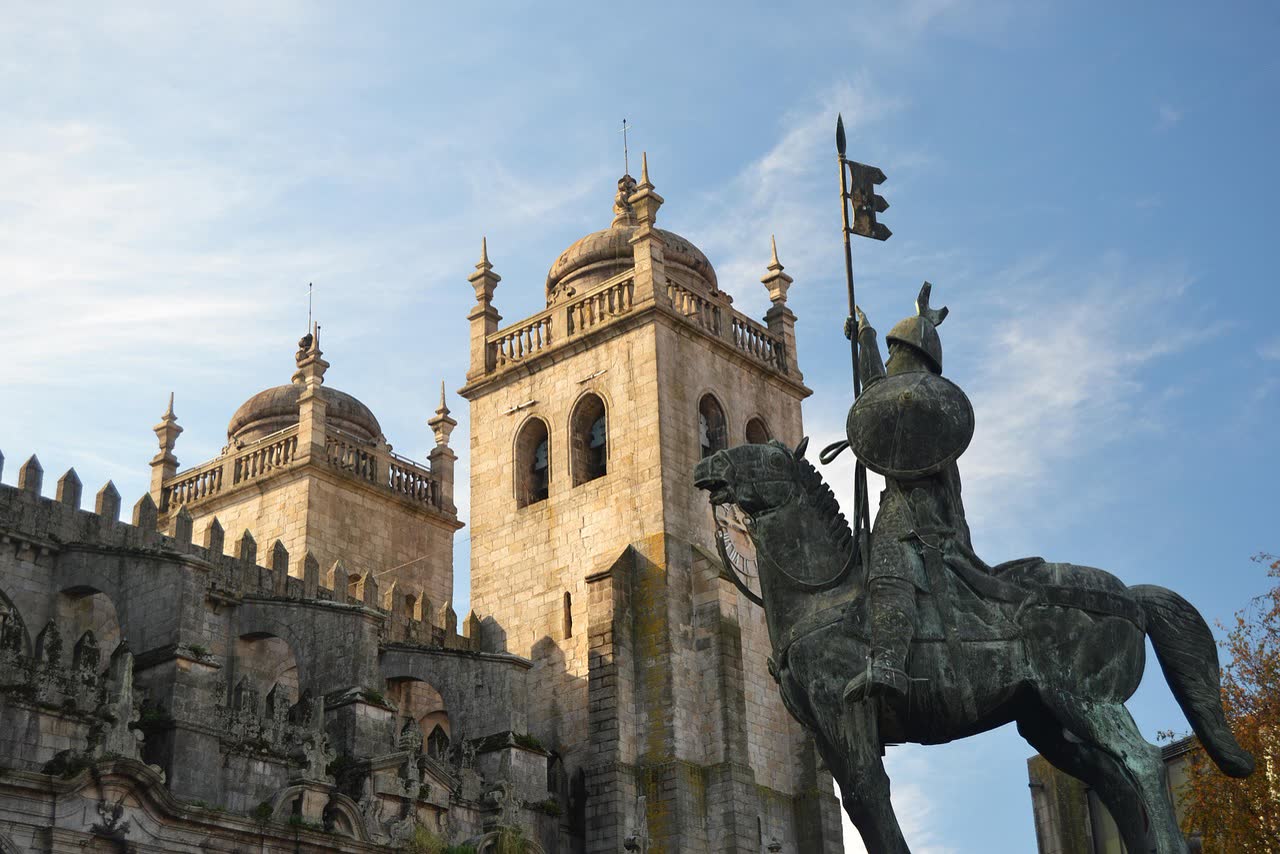
- The façade: twin square towers and a Romanesque rose window, with battlements that recall its fortress role. The main doorway is a later baroque addition from the 18th century.
- The interior: a narrow, tall Romanesque nave, with Gothic and baroque touches. Look for the 17th-century silver altarpiece in one of the side chapels, and the bronze baptism relief by the sculptor António Teixeira Lopes.
- The cloister: built in the 14th and 15th centuries, it’s the highlight. Its walls are covered in azulejo panels from the early 18th century, painted with scenes from the Song of Songs.
- The chapel of João Gordo: a small Gothic funerary chapel off the cloister, with the 14th-century tomb of a knight of the Order of St John.
- The upper floors: a staircase by Nicolau Nasoni, the Italian architect behind the Clérigos Tower, leads to rooms with more tiles and religious art, and to terraces with views over the rooftops.
- The side loggia: Nasoni also added the elegant baroque loggia on the north side in the 1730s. You see it best from outside.
- The Terreiro da Sé: the square in front, with views across to Gaia. The twisted stone pillory is a 1945 reconstruction, made when the square was cleared in the 1940s. The large statue on horseback shows Vímara Peres, the 9th-century knight linked to the founding of Portugal.
Tickets and opening times
The main church has traditionally been free to enter, with a paid ticket for the cloister, the chapter house, the treasury rooms, the terraces and the tower. Visit Porto now lists one ticket covering the cathedral, cloisters, museum and tower, so you may be asked to pay at the door.
| Area | November to March | April to October |
|---|---|---|
| Church, cloister and museum | 9am to 5.30pm | 9am to 6.30pm |
| Tower | Closes 5pm | Closes 6pm |
- Tickets: Visit Porto lists €4 for the cathedral, cloisters, museum and tower, €3 for students and for groups of more than 10, and free for children under 10. Another official listing still shows €3, so expect €3 to €4.
- Closures: the diocese says the church, museum and cloister close at Christmas and Easter. Times can also change for Mass, religious holidays and events, so check before you go.
- Booking: tickets are sold at the cloister entrance and you rarely need to book.
How long to spend
Allow 45 minutes to an hour for the church, cloister and upper floors. Add 15 minutes for photos on the square. It fits easily into a morning or a walk from São Bento down to the river.
A simple walking route
- Start: São Bento station to see the tiled hall. It’s about five minutes uphill to the cathedral.
- Cathedral: visit the church and cloister, then take in the view from the Terreiro da Sé.
- Down to the river: follow the steep stairs and lanes of the Barredo and Pena Ventosa quarter down to the Cais da Ribeira.
- Or across the river: walk along the old city wall to the upper deck of the Dom Luís I Bridge and cross to the port cellars in Gaia.
Getting there
- On foot: about five minutes uphill from São Bento, or 10 to 15 minutes from the Avenida dos Aliados.
- By metro: São Bento (line D) is the closest stop. See Porto public transport.
- From Ribeira: it’s a steep climb up through the Barredo lanes. The Guindais funicular, which normally links the riverside with Batalha, has been suspended since July 2026, so plan to walk.
- By car: not worth it. The lanes are narrow and parking near the cathedral is very limited.
Start of the Camino
The cathedral is the traditional starting point for pilgrims walking the Portuguese Camino north to Santiago de Compostela. Many pick up their pilgrim credential and first stamp here or at the tourist office on the square, then set off from the cathedral steps. Even if you are not walking, you may see pilgrims with backpacks and scallop shells gathering outside in the morning. See the Camino Português.
Practical tips
- Dress: it’s a working cathedral, so cover your shoulders and keep your voice down during services.
- Timing: come early in the morning or late in the afternoon to avoid tour groups. The square is lovely at sunset.
- Shoes: the lanes around the cathedral are steep and cobbled, and slippery when wet.
- Rainy days: the cloister and indoor rooms make it a good wet-weather stop. See Porto on a rainy day.
- Free view: even if you skip the ticket, the Terreiro da Sé costs nothing. See free things to do in Porto.
Nearby
- São Bento station: see São Bento.
- Ribeira: walk down through the medieval lanes. See Ribeira.
- The Dom Luís I Bridge: the upper deck starts nearby. See the bridge.
- The Clérigos Tower: about ten minutes’ walk west. See the Clérigos Tower.
Prefer a guide? Book a Porto walking tour.
FAQ
Is Porto Cathedral free to visit?
The main church has long been free, with a small fee to see the cloister, the upper rooms, the terraces and the tower: €4 according to Visit Porto (€3 for students, free under 10). Visit Porto lists the cathedral itself in that ticket, so check at the door.
What are Porto Cathedral’s opening hours?
Daily from 9am to 5.30pm from November to March and 9am to 6.30pm from April to October. The tower closes 30 minutes earlier, and the cathedral closes at Christmas and Easter.
How long do you need at Porto Cathedral?
About 45 minutes to an hour for the church, cloister and upper floors, plus time for photos on the square outside.
Can you get a Camino stamp at Porto Cathedral?
Yes. It’s the usual starting point for the Portuguese Camino, and pilgrims can get their credential stamped here or at the tourist office on the square.
Is there a dress code?
It’s a working church, so cover your shoulders and avoid very short shorts, and stay quiet if a service is taking place.
More: Porto’s churches and Porto in one day.
See also: Lisbon Cathedral.
Some links in this guide are affiliate or referral links (GetYourGuide, Booking.com, Discover Cars, Welcome Pickups, Airalo, Yesim, Saily, Tiqets, Radical Storage, EKTA, AirHelp, Uber). If you book or sign up through them we may earn a small commission or ride credit at no extra cost to you. It helps keep our groups and this site free.
Still got questions?
Ask 305,000+ travellers and locals in our free Facebook groups.