Trip guides / Planning
How to Order Coffee in Portugal: Bica, Galao and More
Coffee is a ritual in Portugal: a quick espresso at the counter after lunch, a milky galão with a pastry in the morning, a coffee break that’s more about the chat than the caffeine. But ordering can be confusing, because names change between Lisbon and Porto. Here’s how to order coffee like a local.
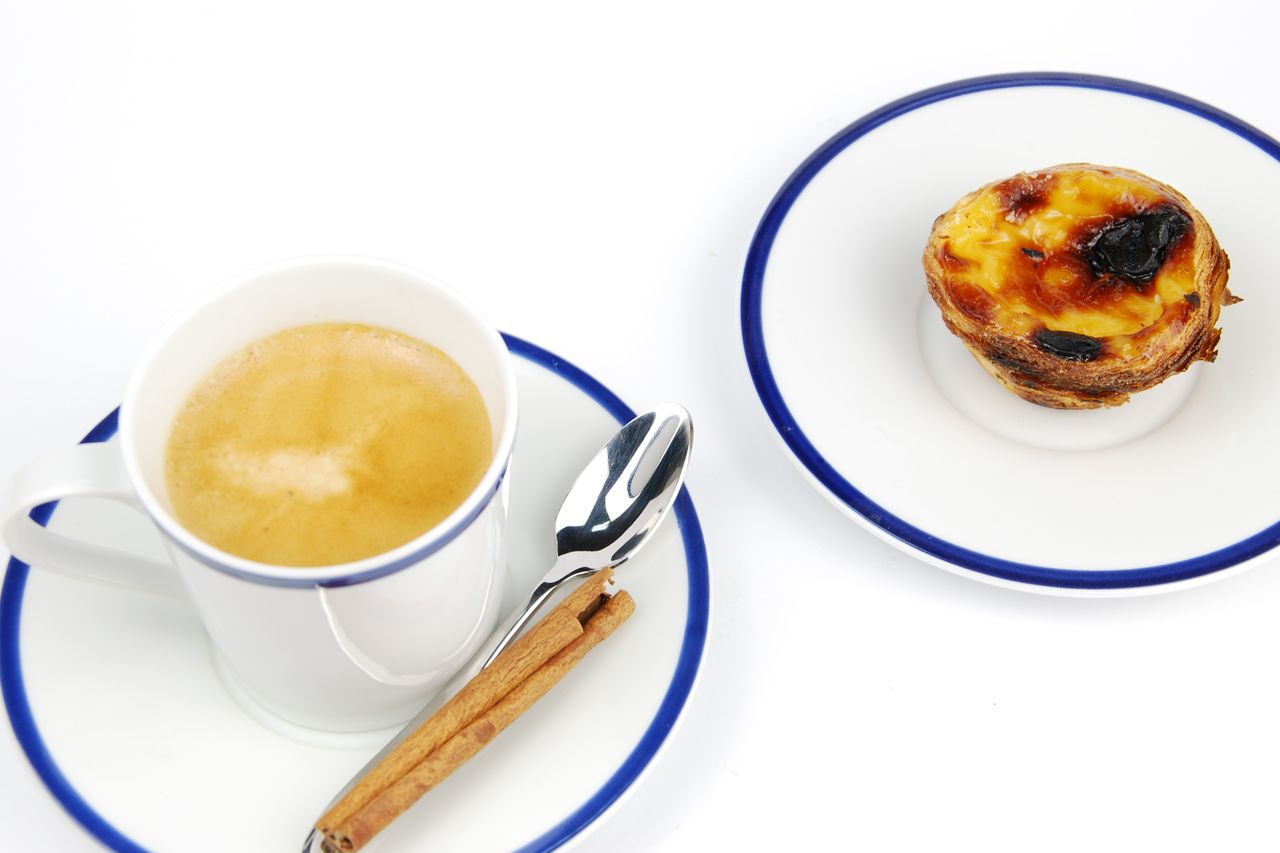
Quick answer: an espresso is um café, called a bica in Lisbon and a cimbalino in Porto, and costs about €1 at the counter. For milky coffee, order a galão (in a glass) or a meia de leite (in a cup). A pingado is an espresso with a drop of milk. Pair it with a pastel de nata.
Taste it with a local: a Lisbon food tour is an easy way to learn what to order, or browse coffee experiences in Lisbon.
Why coffee matters here
Portugal never had a big tea or filter-coffee habit. Instead, the espresso is part of daily life. People stop for one on the way to work, after lunch, mid-afternoon and after dinner. A café is a place to read the paper, meet a neighbour or settle a bill, and nobody rushes you. Learn a handful of words and you’ll fit right in.
The coffee menu
Black coffee
- Um café / uma bica / um cimbalino: a short espresso. “Cimbalino” comes from La Cimbali, the Italian machines that arrived in Porto’s cafés decades ago. The story that “bica” stands for “beba isto com açúcar” (drink this with sugar) is a popular legend, not proven.
- Café curto / italiana: an extra-short, extra-strong shot.
- Café cheio: an espresso topped up a little with water.
- Carioca de café: a weaker, diluted espresso.
- Abatanado: a long black, like an Americano.
- Café duplo: a double espresso.
- Descafeinado: decaf. Ask for um descafeinado.
With milk
- Pingado: an espresso with a drop of milk (like a macchiato).
- Meia de leite: half coffee, half milk in a cup.
- Galão: a tall glass of milky coffee, the classic breakfast drink. It comes very hot, so hold the glass by the rim or the paper napkin.
- Galão claro / escuro: lighter (more milk) or darker (more coffee).
- Garoto: a small cup of milk with a little coffee, often ordered for children.
Something different
- Café com cheirinho: espresso with a splash of aguardente (brandy). An old-school pick-me-up.
- Mazagran: iced coffee with lemon and sugar, an old summer drink you’ll still find in some places.
- Café com leite de aveia / soja: oat or soy milk is now common in city cafés, less so in villages.
On the islands
In Madeira you’ll see chinesa on café boards: a milky coffee in the galão style, usually smaller and stronger. In the Azores, a family café in Fajã dos Vimes on São Jorge has grown its own coffee for decades on a small plot behind the building, a rare thing in Europe. The cup is fruity and mild. See São Jorge island.
From Stephen: We always order an abatanado or an americano, so if you like a longer black coffee, those are the two words to know.
How to order
- At the counter (ao balcão): cheaper and quicker. Stand, drink and go.
- At a table: prices can be a little higher, especially on terraces.
- “Um café, por favor” is all you need. See Portuguese phrases.
- Pay at the end: often at the till on your way out. Just tell them what you had.
- Water: some cafés serve a small glass of water with your coffee. If not, ask for um copo de água.
- Sugar: sachets come on the saucer. Many locals add one.
- Takeaway: ask for it para levar. Traditional cafés may not have lids, as most people drink at the counter.
What it costs
An espresso at a neighbourhood counter usually costs about €0.90 to €1.20, and in central Lisbon you’ll struggle to find one under €1. World coffee prices hit record highs in 2025 and shop prices kept rising into 2026: DECO PROteste found ground coffee in supermarkets up 14% in the first three months of the year alone. The old 70-cent bica has gone. Expect more on a terrace, in a historic café or at a specialty shop, where a flat white can cost €3 or more. A galão or meia de leite usually costs a little more than an espresso. Coffee is still one of the best-value treats in Portugal. See how much a trip to Portugal costs.
Coffee culture
- Portugal’s coffee is strong and rich, often a blend with robusta beans, a legacy of the coffee trade with former colonies such as Angola, alongside Brazilian arabica.
- Big brands: you’ll see the names Delta and Nicola on cups and awnings everywhere. Delta was founded in 1961 by Rui Nabeiro in Campo Maior, in the Alentejo, where the company’s Centro de Ciência do Café (a coffee science centre) tells the story of the bean. Delta lists it as open daily, 10am to 6pm on weekdays and 10am to 2pm at weekends, with tastings; check times before you make the trip.
- After lunch: an espresso is almost compulsory.
- Milky coffee is a morning drink: locals rarely order a galão after a big meal, but nobody will mind if you do.
- Specialty coffee shops are now common in Lisbon and Porto for flat whites and pour-overs.
Historic cafés worth a visit
- A Brasileira (Lisbon): opened in Chiado in 1905 to sell Brazilian coffee. The bronze statue of the poet Fernando Pessoa outside dates from 1988. Go early to beat the crowds at the statue.
- Majestic (Porto): opened in December 1921 on Rua de Santa Catarina as the Elite, soon renamed Majestic, with mirrors, carved wood and leather chairs. It’s pricier than a normal café, so think of it as a sight with coffee included.
- Pastelarias everywhere: the ordinary neighbourhood pastry shop is where you’ll see real coffee culture, and where prices are lowest.
At the famous cafés, sitting at a table costs noticeably more than standing at the bar, and queues build by mid-morning. Go early, or just pop in, order at the counter and look around.
Pair it with
A pastel de nata, a torrada (thick buttered toast), a tosta mista (toasted ham and cheese) or a bola de Berlim. See the best pastel de nata and Portuguese desserts.
FAQ
What is a bica?
It’s Lisbon’s name for a short espresso. In Porto the same drink is a cimbalino, and anywhere in the country you can simply ask for um café.
How much is a coffee in Portugal?
Usually about €0.90 to €1.20 for an espresso at the counter of a neighbourhood café. Terraces, historic cafés and specialty shops charge more.
What’s the difference between a galão and a meia de leite?
A galão comes in a tall glass with more milk than coffee. A meia de leite is roughly half and half, served in a cup.
Can I get decaf or plant milk?
Yes. Ask for um descafeinado for decaf. Oat and soy milk are easy to find in city cafés, less so in villages.
More: Portuguese etiquette and what to eat in Portugal.
See also: Portuguese breakfast and the Majestic Café.
Some links in this guide are affiliate or referral links (GetYourGuide, Booking.com, Discover Cars, Welcome Pickups, Airalo, Yesim, Saily, Tiqets, Radical Storage, EKTA, AirHelp, Uber). If you book or sign up through them we may earn a small commission or ride credit at no extra cost to you. It helps keep our groups and this site free.
Still got questions?
Ask 305,000+ travellers and locals in our free Facebook groups.